Wednesday, April 22, 2009

Sometimes life just sucks... and writing brings some relief.

I will apologize up front for my attitude today. Do you ever feel like no matter how hard you try, sometimes the deck is just stacked against you? If so, you know how I feel right now. Like a salmon swimming up-stream.

And I know the drill. There are children starving in other countries, disease ripping through villages, and totalitarian governments oppressing their populations. All true. One problem. I am talking about feelings, not logic. I wonder sometimes if I am the only one, and in those moments feel completely alone.

I warned you, I'm wallowing.

To top it off, I have not found time for writing lately due to stresses at work combined with a general sense of depression about the state of... things. I'll leave it at that because this is not a political or economic blog.

As I type, I wonder if there is a way out. A path to relief. Well after writing this paragraph, I changed the title to this blog entry because I had an epiphany. In the process of writing the words above, I am beginning to feel a little bit better.

It may be a little cliche, but I don't mind as long as it is true. Expressing your feelings is a big part of healing. Granted most people aren't foolish enough to post their feelings, I mean real feelings, for the world to read on a blog, but I feel like I owe it to anyone out there feeling the same thing.

So if you feel lost in the desert, you are not alone. If you feel overwhelmed by life and the world, you are not alone. If you are struggling in writing your great work of fiction due to lack of time or depression, you are not alone.

You are not alone.

I will not give up, though I am discouraged. I will not stop, though I wish to rest. I will not shut out the world, though I wish to close my eyes.

If you are where I am, I hope you will join me in fighting the urge to give in and give up. You don't have to post it on a blog, but you need to get it out... get it down on paper. Good thing we are writers.

Feel free to comment here, write in your own blog, write in a journal, or write a story that channels your feelings. However you do it, get it down on "the page."

If you read here to the end, thank you for enduring. I hope to be in a better place next time, but I make no promises... except that I'll try.

Until then, lets keep on writing (even if it's therapy).

www.jhughthomas.com

Sunday, April 12, 2009

What to Do When You Think Your Writing Stinks

Based on the title, you would think that I am experienced at feeling inadequate. But of course I'm not... really, no really. I have loads of confidence. Just back off, OK?

Seriously, sometimes (or even often) feeling like you are a lousy writer and you have no right to cut down the trees necessary to print out your draft is a normal part of being a writer. In fact it is probably just proof that you are a writer. I know this happens to me all too often, including this last week.

I was chugging along, finishing another chapter, and then I took a few minutes to read back over the last chapter. Big mistake! The structure was fractured, the backdrop was almost invisible, and the dialogue seemed forced and too much like an information dump.

In short, my writing stunk. I admit it. And from what I hear that is the first step to recovery.

After allowing a brief period of mourning and self-loathing, I stopped myself from wallowing in despair. Let's face it, as writers we often can be quite overly dramatic. Time for a reality break.

Every writer stinks sometimes, especially in a first draft. In fact I would argue that the more often you write, the more often you will stink. It follows the principle that the most successful people are also the biggest failures, because it is just a factor of the number of times you try.

So do not give up!

Rally, charge, and brazenly spill out those words that may never see the light of day again in the same form. Try to stop those doubting thoughts. You will revise. The writing will get better, much better. You can do it! Time is your ally. Dedication is your tool of success.

As a practical matter, read religiously on the subject of writing. If you do not have any books on the craft of writing, set aside a shelf for writing books and start buying and reading them. I am a mere amateur, but I have learned volumes about the craft of plotting, dialogue, character, and so on from the wisdom of other writers. And do not wait until you finish your first novel or your latest project. Make a commitment to read a book on the craft every month. Believe me, it will improve your writing.

I should note that I think it is important to read a variety of different perspectives of writing because a single writing book that you treat as the bible for writing can become a crutch and make your writing stiff, static, or even repetitive. The goal is to learn the craft, not some magic formula to writing a best seller. In my opinion, the best seller is up to you and your imagination, tamed by the strictures and proven techniques of other great writers.

In summary, never let a few pages or chapters of stinky writing stop you from your goals. If it was easy everyone would do it and succeed. Press forward, remember it can be fixed later, and remain confident. After a few weeks or months of work, you may find you have developed a sweet smelling rose.

J Hugh Thomas is a database developer and a programmer who is writing his first novel. Read his blog http://onwritingmyfirstnovel.blogspot.com to see all of his writer's resources and free advice.

Article Source: http://EzineArticles.com/?expert=J_Hugh_Thomas

Sunday, April 5, 2009

Write Even When You Are Not Writing

The other day I was driving home from work, day-dreaming about the story for the novel I am currently writing. As I thought about it, new ideas began to bubble up from somewhere inside me. I knew it was good, and I knew it would enhance the book so when I got home, I quickly found some paper and wrote it all out so I would not loose the essence of what I pictured.

I know this happens to all writers, especially while they are in the middle of a project. What I'm not sure of is how much priority is placed on this time, thinking about your work while you are not at the keyboard.

We all have read that some of your best work can come from your mind solving problems and generating ideas while you sleep. But do we feed our mind before bed? Perhaps reviewing a trouble area or just re-reading your last few pages of writing before bed might prove a helpful ally in your writing the next morning.

And of all that dead time in the car, at the doctors office, at the Jiffy Lube, how much time is spent listening to the radio or flipping through magazines adorned with Angelina Jolie's lips that could be spent expanding or deepening your story. These times are opportunities to wear your creative hat while not generating words and paragraphs, but rather finding or expanding the big picture.

You may find a love story that deepens or a plot line that has additional back story bringing new richness to the texture of the work. We have only a limited amount of time each day, each year, and in a lifetime. In our busy society, it is more important than ever to make time for reflection and to let you mind wander.

The thing is we know how to do this because it is usually how we develop a good idea for a novel in the first place. Just choose to not stop while you are in the crunch of writing the novel.

J Hugh Thomas is a database developer and a programmer who is writing his first novel. Read his blog http://onwritingmyfirstnovel.blogspot.com to see all of his writer's resources and free advice.

Article Source: http://EzineArticles.com/?expert=J_Hugh_Thomas

www.jhughthomas.com
www.twitter.com/jhughthomas
Facebook Profile

Sunday, March 29, 2009

How to Start Marketing Yourself While You Write Your First Novel

We all have those dreams of great accomplishments from time to time. Of climbing Mount Everest, skydiving, or writing the great American novel. Maybe that is you, the writer who is ready to break out. Or maybe you just want to give it a shot. Regardless of the setup, you are reading this article because you are either writing a novel or you want to write a novel. I understand you because I am you. I am on the journey of writing my first novel and hope to finish my first draft soon. However, the pages I have written in my novel only account for a portion of my writing over the last year.

It is just as important to study the current methods, techniques, and technology of marketing novels as it is to write your novel. Why? Because once you are published (think positive), your publisher is not the primary push behind marketing your novel or you as an author. You will be the primary marketing department for all of your creative work. This is a shock to many writers once they become published authors, and probably results in many one time novelists who sell five hundred copies and fade away.

But knowledge is power, and now you know.

So what do you do about it? Read and learn. There are literally hundreds of free online information sources dedicated to online marketing and the more narrow discipline of marketing fiction, both online and through other mediums. I will just lay out a few of the things I did for starters as a baseline.

1) Choose your author name
I know, sounds silly. But if you try Googling your name, you may quickly find that it is very serious. Most people have at least three names, first, middle, and last. You want to find the combination of those names and/or initials least represented in a web search. This will allow people to find articles and websites about you with much less competition from others. For example, I searched for Hugh Thomas and found a well known historical writer by that name listed for pages on end. Then I searched for "J Hugh Thomas" and found no writing competition. Therefore, as a writer I am always J Hugh Thomas.

2) Buy your domain name
It is cheap and in today's world, it is pretty much expected. This also factors into your decision on your author name, because ideally you want to choose that name as your domain, in my case jhughthomas. It is best to get the .com domain, but if it is not available you can always go with something like .net or .info instead. Buy the domain from a company that will allow you to put up a simple website without a hosting fee. This means that for less than $10 per year, you can have a searchable presence on the web with some basic information about you and your novel.

3) Start a blog
In the past you could write a great novel and either academics or media figures would fall in love with it causing old style viral marketing. Today, users are coming to expect a new level of access and interaction with the producers of fiction. This combined with the fact that blogs are probably the single best way to develop a web presence makes your blog critical. My recommendation is to blog about writing your novel, or blog about parts of your novel. The reason is to keep you from being overwhelmed going in too many directions at once. Just write about what you are learning and doing. And post regularly. The best way to lose followers is to post sporadically. Once a week is usually a good schedule. Many free blogging sites exist but I use blogger.com.

4) Feedburn your blog
Now we are getting into some real marketing. By using feedburner.com, you are optimizing your blog to be delivered through RSS feeds to whatever platform the user chooses. In addition, you can give users the option of subscribing to your blog by email. You can setup feedburner to ping Google every time you post a new entry causing it to be instantly indexed for search. There are more features than I can cover here, but I think you can see that this step will go a long way to making you very searchable on the internet. Remember, every skill you learn now will be applied in new ways once your novel is complete. This is a time of education with some side benefits.

5) Blog or podcast some free fiction
I have not reached this stage yet, but I think it is the next logical step. When you are trying to sell a $10-$15 soft cover or a $25-$30 hard cover book, why will a reader choose your novel? Once you are established you have your brand name, like Stephen King or James Patterson, and the brand is what attracts the buyer. The reader does not see a Stephen King book as being a big risk. You do not have that luxury. If you are willing to write some great fiction and give it away, you have a bigger chance of developing readers who will buy your books. The key here is "great fiction," not just your leftover ideas. Spend as much time, if not more, writing multiple drafts and editing your free fiction as you do with your novel. This is your first impression so dazzle your readers so they will come back for more.

This only scratches the surface of all the ways you can market yourself while writing your novel. I hope that these ideas will help you as you complete your novel, get published, and market like crazy to drive up sales.

J Hugh Thomas is a database developer and a programmer who is writing his first novel. Read his blog http://onwritingmyfirstnovel.blogspot.com to see all of his writer's resources and free advice.

Article Source: http://EzineArticles.com/?expert=J_Hugh_Thomas

Sunday, March 22, 2009

On getting published.

A few weeks ago, Ian left the following comment:
"I know it's very easy to write a novel, but very hard to get one published. The ratio of novels written to those published is 200:1. Writing a novel is like buying a lottery ticket."

As an unpublished writer myself, I would like to address this concern for Ian and other writers who are aspiring authors. I'll take it point by point.

1) "I know it's very easy to write a novel" OK, this is true but deceiving in my opinion. Can writing a novel be fairly easy? True. Is writing a novel that is worthy of being published by a major publishing house easy? False. It isn't about writing a novel, but rewriting and more rewriting and polishing and then more rewriting. To edit a novel into a refined work, ready to publish, is a very difficult task that requires discipline, acquired knowledge of reader expectations, some technical writing knowledge, thick skin, and a touch of business savvy.

2) "but very hard to get one published" I think everyone would agree it is difficult to get published. However, from what I'm hearing (word on the virtual street), the economic downturn could be a good thing for first time authors. Why? Because new author's don't get a big advance like established author's do. That makes it a cheaper investment, and editors are expected to turn out a certain amount of production in a publishing house just like any product manager in a business.

3) "ratio of novels written to those published is 200:1" Take heart.
First, realize that many of those who write a novel never send a proper query letter to one let alone fifty publishing houses. Many never take the time to learn the business side of how to get published. If you educate yourself, you have dramatically improved your odds.
Secondly, the odds are questionable. In this article from The Internet Review of Science Fiction, you can see much better odds projected as listed below:

Short Fiction 40:1
Novels 60:1

Then the Writing Smart blog posts that "On the average, 98-99% of submissions to both publishers and literary agents get rejected, especially if you've never been published before."

I think that you have to be reasonable and determined in equal measure. Know what you are facing but do not be deterred by rejections and negative remarks. Persistence, education, and revision are the tools of a writer turned author. I intend to do all that I can to be published one day.

4) "Writing a novel is like buying a lottery ticket" This is only true if you plan on getting rich by writing a novel. If this is your plan, I have a bridge to sell you. The truth is, very few (and I do mean VERY few) authors become wealthy from their writing. Most author's who write full-time are doing well just to pay the bills and live a modest lifestyle. If your goal is money, I would choose a different profession. If you love to write and want to do so regardless of the dollars that follow, you are in the right place. In fact, you are more likely to succeed because you are writing from a point of passion, not profit.

Anyway, that's just my two cents worth. To Ian and all those who question their own odds, I hope it helps. I do not mean to tear down Ian's statements, but rather to encourage you all that it is not that bleak. Apply yourself with all of your efforts and abilities, and enjoy whatever level of accomplishment that results. You may surprise yourself.

Until next time, let's keep on writing.

www.jhughthomas.com
www.twitter.com/jhughthomas
Facebook Profile

Thursday, March 19, 2009

Have questions? Have feedback? Contact me.

If you have any questions or comments about the blog or fiction writing, please feel free to contact me. Not that I'm a fountain of knowledge, but I have learned a thing or two over the last year, and I'm willing to research for answers to questions that I'm not familiar with.

Here are three ways you can contact me.

1) Leave a comment on the blog.
2) Email me at jhughthomas@hotmail.com
3) Leave me a voicemail at 1-630-559-7412

I'll do my best to address anything you are curious about.

Until next time, keep on writing.

Sunday, March 15, 2009

Finally writing the novel again.

I started to doubt if I would ever get back into my novel, but I did it. I know I talked before about how to get started after a break. Now I'll tell you what worked for me.

The re-read of the novel was the first step and there was no avoiding it. After getting back into the flow of the story, I reviewed my notes and the outline. I ran into a problem.

The story and characters had been through some revision and expansion in the back of my mind over the months that I took off from writing the novel. Therefore the outline was not completely relevant anymore.

There were two main approaches that I could think of: 1) revise the outline, or 2) start writing based on what I saw coming next.

I chose to start writing.

Five chapters later, I am back in the flow of writing and moving toward the end of my novel. The basic story has not changed much, but the path to the ending has morphed some. I'm finding a more character centered element to the story that I knew was there, but had gotten lost as I worked on the complex plot elements.

I feel that by stopping and starting again, I was able to rediscover some of the original themes introduced in the early part of the story. Regarding my choice of starting to write over re-working the outline, it boiled down to one thing. I felt that my creative juices were flowing again. I sensed that if I started writing, even if I had to throw some of it out that ultimately I would find some new and interesting parts of my story. I think I was right in my case.

One thing I said before I still believe. You need to believe in yourself and not get discouraged before you get started. Have faith that once you get to writing again, it will be good. Even if it starts slow, you will get there. Believe in yourself, and your hard work will do the rest.

I hope that my success will help someone out there who is in the same position to have my level of success. Get back in that writing chair and show the word processor who's boss.

Until next time, lets keep on writing.

www.jhughthomas.com
http://twitter.com/jhughthomas
My Facebook Account

Sunday, March 8, 2009

How many writing blogs are there?

A whole bunch!

Today is the day of links to other blogs. Let it be written, let it be done. Hope you enjoy.

Setting short term goals.
http://writeforyourlife.net/writing-goals-2-short-term-targets-long-term-goals

A writing blog for twenty-something writers.
http://classyinphilly.blogspot.com/2009/03/writing-blog-takes-off.html

Tips for starting writers.
http://www.3news4you.com/5286/writing-tips-for-novice-authors/

Positivity week? Read and you will understand.
http://nathanbransford.blogspot.com/2009/03/introducing-positivity-week.html

Create your fantasy book cover.
http://100scopenotes.wordpress.com/2009/03/02/create-your-debut-fantasy-novel/

Writing realities.
http://sandraseamans.blogspot.com/2009/02/writing-realities.html

Bottom line, there are tons of blogs with good information and inspiration for writers.

Take advantage of them.

Until next time, lets keep on writing.

www.jhughthomas.com

Sunday, March 1, 2009

What do you want to know about writing a novel?

I try to blog about what I'm dealing with at the time, but I would like to ask if you have any questions about writing a novel. Feel free to email me at jhughthomas@hotmail.com or you can leave a comment on this blog entry.

I may not have a good answer off the top of my head, but I will research any questions I receive so I can learn something new in the process.

Saturday, February 28, 2009

My novel title is taken!

It's OK, just breathe. Breathe... there you go. Don't freak out. Let's just calmly talk about what it means.

If you find that the "perfect title" for your novel is already taken, first consider the legal side of things. According to the copyright.gov website, some items not eligible for copyright protection include "Titles, names, short phrases, and slogans" which means you are in the clear on legal grounds.

Next ask "Is the other book similar at all?" If you have a fiction story called "The Snake" and a plumber has published a how-to book on cleaning your pipes called "The Snake," you aren't likely to have much inadvertent bleed over. But if the other book is in a similar genre and or is simply another work of fiction, you have to decide if it works for you or against you.

I'm just guessing here, but if you have a book called "The Firm" it is possible that you might get some sales, particularly online sales, from readers who think they are getting the John Grisham novel. I would not recommend this as a strategy for book sales because rather than developing a following of readers, you will most likely develop a following of haters, annoyed that they got the wrong book.

As long as it is branded properly and the cover art is distinct enough, you are probably OK with a title that is already used. If it is a very popular title, I would recommend looking long and hard to make sure you can't find another choice for your book.

Until next time, let's keep on writing.

www.jhughthomas.com
Facebook Account

Sunday, February 22, 2009

Am I a writer?

Sometimes I stop in the midst of sixty hour work weeks and all the responsibilities at home and reflect. It does not happen often enough, but it does happen. Right now, I am taking a minute to do that very thing, reflect.

Due to my schedule, I have not written any more in my novel for quite a while. Sure I have worked on a song or two and finished a second draft on a screenplay, but I'm not writing my book. What does that say about me?

Am I really a writer? Am I a wannabe? No easy answers are glancing against my grey matter. So I guess I should evaluate myself.

I have continued to write a weekly blog entry faithfully. Why this and not the novel? Perhaps I have reached a point in my book where I see the light at the end of the tunnel, and I fear the final result.

I have regularly said that I don't care as much about publication as I do about completing the novel. What if that is simply not true? Maybe I care more than I realized.

In the past I have used the logic that if I write regularly, I am a writer. Since I continue to blog and work on other material, I guess I still qualify by my own standard.

Self-doubt will continue to plague me and I will keep fighting back.

I will not give up on my dream, even while allowing my own humanity.

Until next time, lets keep on writing.

www.jhughthomas.com

Tuesday, February 17, 2009

What is the podcast/podiobook business model?

OK, let me start by saying this is a loaded question. All I can do is give you one take on it. What I will present is based on listening to and reading podcasts, interviews, and blogs featuring many different authors taking this approach. I welcome and encourage anyone with opinions to share with all in the comments.

I see the business model as more of a progression, a set of building blocks that you assemble over time. Here are some of the steps involved in this progression.

Step 1: Write some great fiction - It may seem obvious, but until you have some fiction to offer up, you will be stuck at step 1. The beauty is that because you are planning to podcast, you can write short story length, novella length, or novel length. You will probably be podcasting in fifteen minute segments, so you longer source material just means more episodes. It may even be preferable to start with a shorter story to cut your teeth.

Step 2: Reformat for a podcast - In the same way that you can't just act out a novel in front of a camera and get a movie (thus, the screenplay), you may want to do a mild once-over on your story to make it more suitable for audio. Consider how narrative and dialogue will play out in the spoken word by reading your story out loud to yourself. I'm guessing that just as with story writing, the more you do it, the better you get at hearing what works best.

Step 3: Record the episodes and post them - I'm not going into all the details on recording or where to podcast your podiobook in this post, but this is where you really put yourself out there. You are now putting your fiction out into the universe to see what happens. It is important to note that you are giving your fiction away for free. Many people also offer their fiction in PDF format along with the podiobook. More ways for people to consume your fiction. Which leads to the next question. What if no one listens?

Step 4: Market yourself like crazy - This is where you have to spend most of your education time. Learn how to use combinations of social networking, blogging, interviews, podcasting, newsletters, and many other methods to increase the profile of your podiobook and your name. Your goal is to become a recognizable name and a very searchable name on the Internet.

Step 5: Repeat Steps 1 through 4 - The first podiobook is just the gateway to your second podiobook, your first novel, your online collaboration, etc. I won't pretend to know how many times you need to do this to "arrive." The goal here is to build a fan base. With each podiobook you release, you are developing this fan base. Once they are posted, they are there forever so people finding you one year down the road will find a year's worth of content. The growth of free, quality content over time combined with a unique level of customer content is how you will develop a following.

Step 6: Publish you novel - This should probably be one of your podiobooks or a new story taking place in one of your podiobook worlds. It could come in the form of traditional publishing supported by the strength of your online following, or in the form of self-publishing leveraging your online fans who are willing to pay for more of your fiction.

Think about it logically. With the millions of books out there, how do you choose what to read? You read authors you know you can count on for good fiction because you have read their work before. The podiobook approach allows a large group of people to hear your fiction without risking anything but the time to listen. If they like what they hear, they don't think of buying one of your books as taking a risk.

It is a whole new way of thinking. A radical change from traditional publishing.

I'm not saying one way or the other what I will ultimately do, but I know this is a viable model that can produce results if you have the talent and are willing to put in the hours.

Until next time, let's keep on writing.

www.jhughthomas.com

Sunday, February 8, 2009

Podcast your novel. The new face of publishing.

Often in history, innovation causes a shift in the direction of business. The telegraph industry gave way to the telephone business. The horse and buggy were replaced by the car industry.

That's not what we are seeing in publishing.

It is a new age where people operate in a new way. In the last ten years, the ipod, audio books, podcasts, and blogs have come into their own. People consume entertainment and information in the midst of a busy day, on he fly, or on-demand. On an average day, most people read less on the written page than on the computer screen. Increasingly, people hear less on a CD than on their ipod or computer streaming.

It isn't a replacement of a previous industry, but a change in the way we operate, and therefore the way the publishing industry must operate in order to keep up.

I still think it is a valid pursuit to seek traditional publishing, and probably the best place to start. Just don't stop there. And depending on how small a market you expect, you may even want to start with the "non-traditional" approach.

You should study the pioneers of the podcast novel including J.C. Hutchins, Scott Sigler, Tee Morris, Mur Lafferty, and so many more. If you listen to interviews or personal podcasts by these individuals, you will quickly find that the podcasting route requires a lot of work... I mean a lot. But it can pay off in the end.

Check out the selection of Podiobooks that are available. You could be next on the list.

This is a good article about the brave new world of podcasting fiction.
http://www.time.com/time/arts/article/0,8599,1872381,00.html

I will probably do a more in-depth blog on the podcasting option in the future. Until then, let's all keep on writing.

www.jhughthomas.com
www.myspace.com/jhughthomas

Sunday, February 1, 2009

It's hard picking up where you left off.

A few weeks ago, I laid out my plan for getting back into my novel. Read what I have written so far, read my character notes, and press forward. Well I have read my notes, and finished reading the incomplete novel, but I have not written anything new.

The problem I ran into, other than not having much time, is something I warned against... wearing the editor's hat while reading what is written. I saw plot problems and issues that need to be resolved, and it is difficult for me to ignore those problems and press forward as if they were already resolved. At the same time, I am not editing the first part of the novel. I am making no progress at all. The least favorite place for a writer to find himself.

Rather than falling into frustration, I put it aside for a few days and plan to return with a fresh approach. Since I know some of the things that need to change, I will pretend that I have already changed the path of my story. The new pages I write will reflect the new course and ignore the problems that exist in earlier pages. I still don't know exactly how I will start up the story again, but I'm getting closer now.

I will keep you informed on how things are going. If you hit a rough patch, I recommend trying to write anything related to your story. That is what I plan to do now, and weave my way back toward the story.

So until next time, I will start writing and you can keep writing.

www.jhughthomas.com

Sunday, January 25, 2009

How to Write Dialogue - Part 2

Last time was more general, about the different approaches to writing dialogue. Now I'll try to talk a little about some practical techniques. To me dialogue is one of the hardest things to write, so forgive me if my advice is less than stellar. However, if you have a hard time with dialogue, my tips may help some.

1) Be the character for while - This can be very embarrassing, but it is effective. For a period of time, pretend you are one of your characters. Do it while you make dinner, sort through the mail, and talk to your family. Before they haul you off to the loony bin, you might want to tell your family what you are doing. The point here is not to play out your dialogue, but to get into the head of your characters. After you live through some casual conversation and activity of your characters, you will be much more prepared to write dialogue that sounds true.

2) Role play with your friends and family - Once again, embarrassing but effective. The key here is to hear your dialogue out loud, spoken by different people who are interacting. This method makes it easy to find dialogue that just does not work, and it can also help you improvise new dialogue that is more organic.

3) Stop worrying about squeezing in your information - This is a tricky one. Obviously when writing a novel, you are trying to get information across to the reader and stir up emotion. If you focus on the information it can cause your dialogue to sound more like a school lecture, delivering that information. Use steps 1 and 2 to drive realistic dialogue. If you don't communicate everything you want to get across, consider some narrative with thoughts and reflections. If that doesn't work, start tinkering with the dialogue, but don't allow it to become stale.

Believe me, I want to write dialogue that jumps off the page and allows the reader to believe every word was really spoken by real characters. It may take months or years to get there, but the first step is to write it down, revise it, and make it as real as you can at this point. I try not to beat myself up for not being the king of dialogue, and neither should you. Just work on your craft along with me and see your work improve with time.

That's all for now. Until next time, let's keep on writing.

www.jhughthomas.com
www.myspace.com/jhughthomas

Sunday, January 18, 2009

How to write dialogue

As usual, I write about the areas I struggle with the most. While reading back through my first draft, I have become keenly aware that my narrative passages far outweigh the dialogue. So here are my thoughts on what I'm doing wrong, and what I think I need to do about it.


1) Understand and accept your natural style - What I have noticed about my first draft is that as I am trying to tell the story that is in my head, or that is coming to me as I type, due to my natural style this comes out as narrative which is fine. Some people will naturally write a first draft with an abundance of dialogue and very little narrative. I think it is a matter of personal style and playing to your strengths when you are in creative mode.
2) Work twice as hard on the part that is not natural - For me that is dialogue, but for you it may be narrative passages. The important thing is that you don't just lean on your strength and leave the rest behind.
3) Dialogue provides insight you would hear in person - While narrative can show thoughts and feelings, dialogue is a much more effective way to show the personality of a character. Why? Because it is the way we interpret personality every day in real life. It is a skill that everyone has mastered, listening to voice and understanding sub-text. Showing personality through narrative is far less dynamic and engaging as well.
4) Narrative provides insights that you would see in person - I try to put myself in the character's place, walking down the street. What do I notice? What about the smells, sounds, and sights come to life? Narrative is a great place to explore these experiences.
5) Balance is key - This is a lesson I need to learn. When you read a well balanced page, it propels itself forward, flows to the reader, and keeps you involved. The dialogue and narrative text are weaved together in such a way that the story never becomes too stale or too wordy. I think it is an important goal to be conscious of balance because it may make the difference between a good story idea and a well crafted novel.

As usual, I continue to scour the internet for good resources to help me, and you, write our novels. I found a good post on Deep Genre titled How to Write a Novel (Part 1). It was written by two time author David Louis Edelman who is writing his third novel as I type. If you enjoyed part one as much as I did, you can followup with Part 2.

On my writing update, I worked through the movie script with my family and we hammered out a second draft. Still more work to do, but it is coming along. On the novel, as you can tell from this post, I am still reading through what I have written of the first draft to get me back into the characters and the plot. I am more than half-way through so hopefully I will be writing again in the next week or so.

Until next time, lets all keep on writing.

www.jhughthomas.com
www.myspace.com/jhughthomas

Sunday, January 11, 2009

How to write a novel... after a break.

If you have been following this blog, you know I took a detour to write a screenplay for a family movie. It is only a first draft, but I will edit the screenplay with the whole family since it is a family project. So for me personally, I am free to spend my morning writing time on my novel again.

What was my novel about? Who are the characters? Where did I leave off? I quickly find myself drowning in a sea of questions without quick answers. I know as writers, we will all be in this situation from time to time, so I will try to lay out a game plan not just for my benefit, but for all those returning from the detour.

1) Read everything that you have written so far - This seems like a simple and obvious choice, but if you aren't careful, you can derail your writing efforts quickly. Just because you are reading your novel, it does not mean that you are editing. However editing, for me at least, seems the natural tendency when reading my work. Therefore be deliberate in reading for content, tone, plot, character, and flow... not for editing. Use the reading time to get back into the mindset that you were in when writing that which is complete.

2) Read your character summaries - If you don't have character summaries, this may be a good time to write them. Otherwise, review your character summaries to remind you of background history not revealed in the story. Get back in touch with who they are and how they fit into your plot. Which characters cause natural conflict and natural harmony? Are their key events in your plot that are driven by aspects of certain characters? Ask these types of questions to refresh your memory, and prepare your mind.

3) Review your plot outline - During step one and two, you may find that your outline is slightly off, or that the story has moved some in a different direction. Take this opportunity to modify your outline some if necessary, but don't get bogged down. I don't consider this editing since it is not finished words committed to the page, but just an outline. And if you make some quick outline changes now, you are really just getting into the flow that you were in when writing your first draft a month or two (or more) ago.

4) Prepare for your next chapter - When you are writing a first draft, you may not do much preparation from chapter to chapter. You are writing in a flow. However, after a break in the flow it can be scary to return to your manuscript. What if I can't do it? What if it does not flow? What if I am a pathetic excuse for a writer and I have no business killing trees to preserve my writing? Push these questions out of your mind because by the fact that you constantly question yourself, it proves that you are a writer, regardless of skill level. I suggest preparing for the next chapter with maybe a more detailed approach to give you the confidence to start typing again. If you are like me, confidence is the attribute always in short supply.

After the next chapter is written, hopefully you, and I, will be back in the flow again... pressing on to the end of our novel. My challenge to you and myself is not to allow fear of failure to prevent a return to the vulnerability and challenge of writing a novel.

We are capable of finishing. It is a decision.

So until next time, let's all keep on, or start, writing.

www.jhughthomas.com
www.myspace.com/jhughthomas
My Facebook Account

Saturday, January 3, 2009

Writing Contests for 2009

Happy New year to all, which means a whole new wave of writing contests are rolling out. This article from writers-editors.com is an excellent listing of contests, in order by the submission deadline. The deadlines range from January 15 to May 15, so you have time.

These contests cover a wide range, from poetry to a one page plot synopsis. You can start from the time you read this blog and be ready to submit by the deadline. Why not? What do you have to loose?

Here are some other listings.
Perhaps the best place to start is Writer's Digest.

Contests for best mystery, private eye, or first crime novel.

For later in the year, September, consider the three day novel writing contest.

Another list of non-fiction, flash fiction, short fiction, etc. contests.

As for my writing update, I FINISHED THE SCREENPLAY! I actually finished it late on New Year's Eve, so it was done in 2008. Thank you to Scriptologist.com for the article on screenplay formatting (which I knew nothing about) and to Microsoft for having a downloadable screenplay template for MS Word 2003. I am in the process of moving all the text into a formatted version, but the first draft of creative work is done.

Incidentally, the entire first draft of the screenplay will end up being around fifty formatted pages which according to FilmSchoolOnline.com equals about fifty minutes of screen time, a convenient 1-to-1 ratio of pages to minutes. In addition, the entire first draft was written on the small keypad of my T-Mobile Shadow phone.

After I finish moving the text into a formatted screenplay, I will be back to working on the novel with a fury. Next time, or at least soon, I plan to blog about picking up on a novel that has been set aside for a while.

Until then, let's keep on writing.

www.jhughthomas.com
www.myspace.com/jhughthomas
Facebook Account

Monday, December 22, 2008

How To Find A Writing Routine

As often happens, this blog is born out of my writing situation... in this case my personal state of unrest and dissatisfaction with my consistency in a writing routine. And as the title indicates, I think this is more of an art than a science. Therefore, I will try to help you (and me) "find" a writing routine that works for us respectively.

We have all heard a million talks, seminars, and slogans on establishing a routine. Here are a few items that seem relevant to our position as writers, presumably all of whom hold down full-time jobs (and yes, that includes stay at home moms).

1) What is your current routine? - This may be the most important step. Everyone has parts of their life that are routine, affixed to specific times that occur every day, or at least on weekdays. Write down a list of the items in your current routine that are fixed in time so you have them available to you in the following steps.

2) What time of day do you write your best work? - This is trial and error. If you don't already know, take a few Saturday's and try different things. Get up early once, try the afternoon next, and then try evening and late night. See which of these times seems the most productive and the time when your creativity seems to flow with the most ease.

3) What time slot can you consistently use? - Here the pain begins. Those who don't really want to write will find an excuse for all times of the day. But in reality, if you want it badly enough, you can make time. The ideal situation is to pick a time where point #1 and point #2 converge so you can be most productive and follow a daily routine. In the practical world, you may have to settle for a time that you can squeeze into your schedule, regardless of how it suits your preferences.

Bottom line is routines are hard to establish. It feels less like creative fun and more like work. My question to you (and myself) is how important is it that you finish your novel? How badly do you want to be published? In twenty years, will you regret that you never spent those extra minutes writing and editing? Will you ask, "What if?"

My advice is simple. Don't forecast regret. Take action today.

Better to try and fail than never to try at all.

On the writing front, I finished another two scenes in my script. If I have a productive Christmas holiday season, I may even finish before years end.

Until next time, let's all keep on writing.

www.jhughthomas.com
MySpace Account
Facebook Account

Sunday, December 14, 2008

More free website monitoring

I've been sick for the past few days so this will be a short post.  I want to thank one of my readers for commenting with more website monitoring options, two specifically.

GoStats.com is a free monitoring site similar to statcounter.com, but this one has unlimited log size where statcounter limits you to 500 log entries.  I signed up and tested it out, and found it to be a very easy setup and browsing experience.  The reports are extensive, although there are many links that don't work with the free account.  The paid version is $8/month or $90/year, but I wouldn't pay for a service like this until you are making good money on the site.

Alexa.com is a public website information company. You add a web page that they provide to your site, and they monitor your traffic. In this case, the traffic stats are available to anyone who wants to check through alexa's website. This would be useful if you are trying to get sponsors and advertising for your website once you have a decent amount of traffic. Send potential advertisers to this site and let them check your public stats for themselves.

One more thing I wanted to comment on is the new posts that recently started to see if you are a subscriber to this blog.  What I am referring to is posts with Delicious in the title.  I have setup my blog feed to include bookmarks that I add to Delicious on a daily basis.  Therefore, if you subscribe to this blog you will also get links that I find interesting through the week, but that I don't have time to specifically blog about. If you are not familiar with Delicious, I highly recommend it as a "portable favorites" list that is always available to you, no matter the PC, Mac, or web enabled device that you are browsing from.

That's all for this week. On the writing front, I finished another scene in my script. I believe I'm about six or seven scenes away from completion and then back to the book.

Until next time, let's keep on writing.

www.jhughthomas.com
MySpace Account
Facebook Account

Thursday, December 11, 2008

Join A Writing Group: My musical diversion


I may have mentioned before that I enjoy all forms of writing, including song writing. For the last few months, I have been attending the monthly meetings at the Birmingham chapter of NSAI (Nashville Songwriter Association International). In the meetings, the leader brings us experts on various aspects of the music business, from songwriting to publishing. We also have the opportunity to present our songs to the group for critique.

As scary as it may be, presenting your writing to a writing group is a very helpful and important process. It can help your writing, but more importantly it prepares you to handle criticism. One thing is a fact: if you are a writer, your writing WILL be criticized if you want to do anything other than keep it in a drawer. It is great practice to learn how to receive constructive criticism, reject useless criticism, and develop the discernment to distinguish the difference. This can only be accomplished with practice.

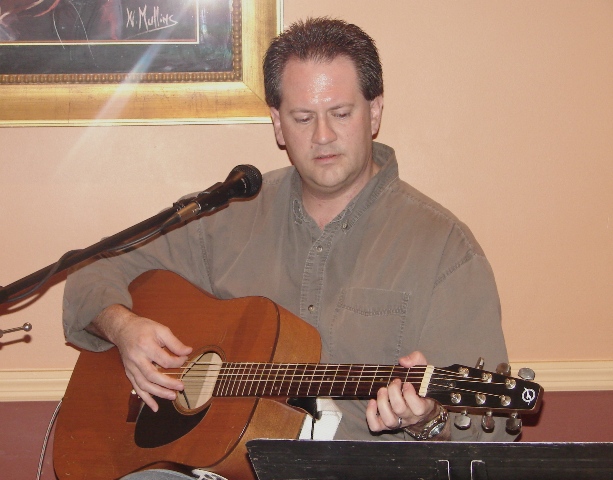
On the fun end, this Monday night I performed in front of the songwriters group at Java and Jams which represents my first live performance of music in about fifteen years. It was simultaneously terrifying and exciting. You may not be a musician, but I recommend that you put yourself out there in a way that is uncomfortable to you. It may mean presenting your writing to a writing group for critique. Or just talking about your writing in front of a group. If you are published, do you think you are ready to be interviewed or are you afraid of public speaking?
Stretch yourself, because if you aren't developing your weaknesses, they will never become strengths.

Sunday, December 7, 2008

Monitor your writing website and blogs

Last time I mentioned using feedburner.com to burn your blog, which gives you easy RSS subscription management, email subscription management, and some statistics on how people are using your blog. I want to build on that post with some more ways to monitor how your blogs and websites.

The first requirement for me is the price... FREE! Because I am not making any money doing any of this, it is important that the services are both free and useful. Here are some options to consider.

Statcounter.com is a great website for tracking standard statistics such as number of unique visitors, number of page loads, or search phrases that were used to find your blog or website. It is easy to sign up for a free account, and place a small snippet of HTML on each of the web pages you want to track. You can track the path that users take through your site grouped by user which makes it easy to find what is working well in your site and what users are not finding. Another neat feature is tracking the city/country of all your visitors. I love seeing the list of visitors to this blog from the USA, UK, Canada, Australia, Germany, Spain, Indonesia, France, New Zealand, and dozens more. And by the way, thank you all for your continued support.

Quantcast.com is an interesting site that tracks demographic information about your visitors. I have not started using it, but I read about it in Randy Ingermanson's ezine through his website advancedfictionwriting.com. Through quantcast, you can get a visitor breakdown on gender, age group, income, and more stats that are not commonly available through site trackers.

Start simple. If you only have time to do one thing online, I recommend setup one blog, feedburn it, and setup statcounter to monitor the results. That's what I did, and it is a great learning experience. If I ever get to the point of being a published author, the idea is to have already mastered the online marketing world so I don't have to hire it all out to others.

Because if there is one thing I have learned from the experts online, as the author, you are the one that will be most responsible for marketing your book.

And for my writing update, I only finished one scene this week. I'm a self-declared slacker, but I'll make up for it.

Until next time, let's keep on writing.

www.jhughthomas.com
www.myspace.com/jhughthomas

Tuesday, December 2, 2008

Writing Competitions in December 2008

Just a quick post to pass along this blog entry from the Writers and Authors blog. I don't have time to join in a competition right now, but if you do have time, go for it. What do you have to loose?

http://writersandauthors.blogspot.com/2008/12/writing-competitions-this-month.html

Even if you don't enter a contest, let's all keep on writing.

www.jhughthomas.com

Friday, November 28, 2008

Setup your writing website.

Last time we covered several areas of online marketing. It seems like a good time to talk more about the most important item, your website. I'll go over what I have done and then talk about other options.

I went to GoDaddy.com and did a domain name search for hughthomas.com and found that the .com domain was taken, but the .net, .info, etc... domains were available. Since I searched for "hugh thomas" and found other authors popping up quickly in the results, I tried including my first initial, "j hugh thomas." Fortunately, I did not have much if any competition with this name.

Before I bought the domain, I also checked MySpace.com and Facebook.com to make sure the jhughthomas account was available, and they were. I don't know if this is important, but I figured it was easiest for anyone trying to find me to have the same exact name presentation across the Internet.

I had purchased domain names through GoDaddy.com before, and it was a good experience, but I decided to search around for options. I ended up buying jhughthomas.com from 1and1.com for two reasons.

One, they offered the first year of domain registration for just $3.99, and $8.99 for each year afterward.
Two, they offered a basic SiteBuilder online software that allowed you to setup a basic five page website under your domain... WITHOUT A HOSTING FEE!!!

The free monthly hosting for a basic website sold me. I knew I wanted to establish my website and submit to search engines, but I had no idea I could do all this without the cost. One day when I'm published (knocking on wood) I can always buy a hosting package and use real website design software to make something fancy to promote my novel. But for now, it is perfect.

If you are unsure what you should put in a basic website, take a look at what I did at jhughthomas.com and you will see it does not have to be much. And it is good practice to write blurbs about yourself and your book(s) because you will need to do this for your back cover and inside cover copy for your book eventually. In addition, I welcome any suggestions you may have about ways to do more with my basic site.

I hope this has helped some for anyone who does not know where to start with their website. If there are any of you who have specific topics you would like to see covered here, please feel free to make requests in the comments section, or email me directly at jhughthomas@hotmail.com

Until next time, lets keep on writing.

www.jhughthomas.com
www.myspace.com/jhughthomas

Thursday, November 27, 2008

Happy Thanksgiving!

I hope you all have a wonderful Thanksgiving, eating too much turkey and pie. After the day is over, consider posting a story about your family gathering, either on the comments here or on your own blog. Sometimes holiday stories are more entertaining than anything we could make up.

Have a great one,
Hugh

Sunday, November 23, 2008

Marketing my book online... before the book is finished?

In case you are not sure from my title, I have not completed even the first draft of my novel. And yet I brazenly state that I should be marketing now. Am I completely insane? Possibly, but I will explain why I think that regardless of where you are in the writing process, your marketing should already be in the works.

There are many facets to marketing: advertising (print/TV/online), interviews, podcasts, blogs, book signings, etc. I only know a little about marketing because I am unpublished, but I am convinced that the earlier you begin one portion of marketing, the better off you will be. What is this portion?

Your online presence!

You don't need a published book or even published articles to begin establishing an online presence. You just need some time and the will to explore your options. Here are a few of the areas that I am exploring during my writing process.

1) Buy your domain name. In today's world, this is a no-brainer because it is cheap and expected. Most importantly, it takes time for your domain name to be crawled by all the search engines, linked to by other websites, blogged about, etc. This time translates into quick and easy search results when you do get published and someone is Googling your name. Which leads to point number two.

2) Choose your author name wisely. May sound silly, but in my opinion, this is a big one. I go by Hugh but I choose to use J Hugh Thomas as my author name in part because the domain name jhughtomas.com was available. In addition, when I Google Hugh Thomas, I get many results for a history writer named Hugh Thomas. To prove my point, Google the name "j hugh thomas" and you will see my website and this blog right at the top. That is what you want... to be easily found if someone is looking. Not to mention, many people will start by typing in the URL of the person's name before they even Google. Every advantage counts.

3) Write a blog. Since they are free to run, this is another given. What do you blog about? I'll answer with the question, what are you interested in? What is important is that you are writing regularly in a communicative way, not in fiction style, and you are establishing more of a web presence with every post. Don't forget to link back to your domain name in every post which also helps boost the ranking of your primary site. Have many interests? Write several blogs. But make sure you can post at least once a week. If you post less than that, you will loose any loyal readers. I recommend blogger.com because it is what I use, but I'm sure the other free services are just as good.

4) Feedburn your blogs. If you don't know what this is, go to feedburner.com and read all about it. Bottom line is you have a distribution option for people to subscribe by email or RSS feed to your blog, you can track your subscribers, see when your blog is web crawled, tell the service to notify the search engines every time you post a new entry, etc. It is a free marketing and management plug-in to your blog, and all it costs is your time to set it up.

5) Social Networking. If you don't already have them, setup Facebook and MySpace accounts at a bare minimum. Once again, you will link between your blog/domain/facebook/myspace which helps your web presence. More importantly, you can join writers groups for support and reading groups for future marketing opportunities. The more friends you add over time, the more people you can directly market to once you are finished with your book. One important note here. DO NOT OVER MARKET TO YOUR FRIENDS OR GROUPS!!! This is a big no-no and you will be shunned if you take advantage. However, an email/message blast when your book is launched is perfectly acceptable. You would also be surprised how many professionals are lurking in these groups... agents, marketers, editors... so you may end up with a great support network to boot.

That's enough to start with, but it is just the tip of the ice burg. Don't get overwhelmed by it all. Just do something now so you aren't rushing to appear online after your book is on the shelves.

Resources:
Writing Excuses is a fun podcast that is entertaining and informative on the writing process. It holds to a short 15 minute format which is perfect on the go. You'll find yourself laughing and learning in the process.

Here's an article on How to get your first novel published by Jackie French. Since she is a published author many times over, better to follow her advice than mine.

Oh, and I forgot my weekly writing update last time. Over the last two weeks, I have finished another three scenes for the screenplay. The story is coming along nicely and I think I have reached the half-way mark. I believe that by the end of the year this will be done and I will be back full-time on the novel.

Until next time, lets keep on writing.

www.jhughthomas.com
www.myspace.com/jhughthomas

Sunday, November 16, 2008

Do you ever have one of those weeks?

We all have bad days... bad weeks... periods of time with disproportionate negative energy piercing our body like beams from a rouge x-ray machine. Well I'm overstating, but I have had car breakdown, server problems at work, and I'm still in the middle of a hard drive reinstall at home, which is not going well.

To add insult to injury, I turn 40 this week. So due to time constraints, I don't have a thoughtful post this week. Until next week, lets keep on writing.

Sunday, November 9, 2008

Abusing misdirection

One of the great tools in writing is misdirection, where you have the reader thinking in one direction and then you pull a quick change and they say "Ooohhh. Now I get it." It is great fun to write this way, but beware of the pitfalls.

1) You left no clues along the way, nothing the reader can pick up on, and therefore the reader feels bamboozled. This is probably the biggest pitfall, and the most common offense. And I'm not talking about the crime novel where you don't have all the clues until the end. I'm talking about the trusty sidekick who has been acting in such a way that there is no shred of animosity, no hint of trouble, and in the end the sidekick tries to kill the main character because he jailed the sidekick's father. Whoa! The point is, if you are writing without a plan and you end up shifting in this direction toward the end of writing the story, it means you have to do a major rewrite to allow room for the sidekick to turn on a dime at the end. No quick change. It is cheating.

2) The entire story is a house of cards building to an expectation of an emotional climax where the lead character confronts his father's killer. Then, in an unexpected twist, we find out the lead character is a CIA operative who has to save the world, leaving personal problems behind. OK, go ahead and use the CIA part, but for heavens sake, don't build up an expectation for an emotional confrontation and not deliver. It is cheating the reader, and it may actually turn the reader off so much that they either don't finish the book or never read another one of your stories. You don't have to be predictable, but you must provide some level of emotional satisfaction to the reader.

3) It was all a dream. Cough... cough... gag... Sorry, unless you are finishing the Newhart TV series (which was a brilliant end), I don't recommend you use the "it was a dream" ending unless you do it with the greatest of skill, and there is a darn good reason... and it is emotionally satisfying... and it won't make the readers all say, "That was the stupidest ending ever."

Just my two cents. If you have any additional insights or examples, feel free to comment.

Resources:
Here is a blog entry on Writing Software and Downloads. I haven't tried any of them, but they look promising.
http://www.mindtweaks.com/wordpress/?p=963

The mighty Mur Lafferty, podcaster extraordinaire, had a good podcast interview with Benjamin Rosenbaum, talking about using the Creative Commons license. It is an interesting license and worth exploring.
http://murverse.com/2008/11/03/isbw-104-interview-with-benjamin-rosenbaum/

That's all for this week. Until next time, lets all keep on writing.

www.jhughthomas.com
www.myspace.com/jhughthomas
My Facebook Page

Monday, November 3, 2008

How would your characters vote?

Don't worry, I'm not getting political. This is, and will remain, a writing blog. However, I think it can be a fun exercise to take each of your main characters and imagine them debating the issues and choosing a candidate. To some, this may be the fun equivalent of fingernails on a chalkboard, but the point of the exercise is to know your characters better.

Maybe write a short dinner party scene in which your characters take their sides and defend their positions. In the process, make sure you are being true to the character you have written thus far in your book (assuming it is an unfinished novel). Or perhaps you will learn something new about your character that you had never considered before, maybe even some back story. Anyway, have fun with it and strengthen your characters in the process.

Here's my latest true confessions in writing. I finished two more scenes this week in my screenplay. Slowly but surely, I'm finishing the movie so I can get back to the novel.

RESOURCES:
I found an interesting article titled "The literary web" that talks about the habits and tools of readers using web resources.

Another reminder that this is NaNoWriMo month, where thousands of people try to write a novel in a month. If you are interested in getting a late start, here's an article on it.

Think you'll never finish your novel? That you will never be published? Take encouragement from someone who has just finished the journey, Alice J. Wisler with her book Rain Song. Reading about how she made it may be the push you need to continue writing.

Last but not least, here is an interview on query letters and pitches.

That's all for this week. Until next time, lets keep on writing.

www.jhughthomas.com
www.myspace.com/jhughthomas